Nude reclining, 20 minute pose, graphite and chalk pastels, face not done well
Reclining nude, 30 minute pose, charcoal and emulsion, good compostion
Nude seated. Wax crayon and watered down ink, wax resist, 20 minute pose, composition and shading
Nude seated, charcoal and emulsion, 20 minute pose, good tone, face not right
Last piece of session, nude stood, 20 minutes, good form and composition, charcoal
Contextual E-file, recording progress of work within Lincoln's Graphic Design Degree
Showing posts with label Life drawing. Show all posts
Tuesday, 24 January 2012
Thursday, 12 January 2012
Life Drawing Part 4
This session was a little different, as the model was male and therefore the proportions were very different to the female form I was used to.
Firstly, we did four 10 minute poses, in which the model rotated 90 degrees. This was to get used to his proportions, instead of the curvy female figure, the male's body was muscular and slim.
For the second pose, the model rested his arm on to a ladder for 20 minutes. I used a pre-made surface consisting of emulsion, old music sheets, plasterers scrim and net. As the surface was very raised and textured, drawing with charcoal was difficult.
Thirdly, he posed again for 20 minutes, leaning on the ladder. I used another pre-made surface which was less textured, and chalk pastels to create tone. I feel the proportions of the figure are more realistic.
The next 20 minute pose was on black sugar paper with chalk. I think the proportions and tone are reasonably realistic.
For the last pose, the model was in a sitting position. I used charcoal and chalk to add highlights and darker tone, using the paper as the midi tone. This is my favourite life drawing to date, as the composition, form and tone are all successful.
Firstly, we did four 10 minute poses, in which the model rotated 90 degrees. This was to get used to his proportions, instead of the curvy female figure, the male's body was muscular and slim.
For the second pose, the model rested his arm on to a ladder for 20 minutes. I used a pre-made surface consisting of emulsion, old music sheets, plasterers scrim and net. As the surface was very raised and textured, drawing with charcoal was difficult.
Thirdly, he posed again for 20 minutes, leaning on the ladder. I used another pre-made surface which was less textured, and chalk pastels to create tone. I feel the proportions of the figure are more realistic.
The next 20 minute pose was on black sugar paper with chalk. I think the proportions and tone are reasonably realistic.
For the last pose, the model was in a sitting position. I used charcoal and chalk to add highlights and darker tone, using the paper as the midi tone. This is my favourite life drawing to date, as the composition, form and tone are all successful.
Sunday, 1 January 2012
Life Drawing: Part 3
10 minute poses, graphite and charcoal, gauging the proportions
30 minute pose, Chalk pastels, experimenting with tonal colour, perhaps to small.
30 minute pose, Chalk pastels, continuing tonal colour, larger with better proportions.
30 minute pose, Chalk, difficult due to angle.
Wednesday, 28 December 2011
Monoprints/ Monotypes
Howard Jeffs
Stars in the Night Sky Monotype, 2003- 5
38 x 28cm
embodies colour, light, form and textures from different seasons
Howard Jeffs
Sunflowers on Edge of Field Monotype 2003 - 5
75 x 58cm
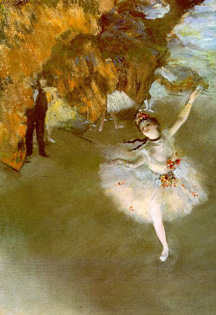
Edgar Degas
The Star, pastel on monotype, 1876- 7
Ruth Weisburg
Separating the Waters, Monotype, 1996
19 3/4 x 27 3/4 inches
captures the underwater and ripples of reflection and light
Camille Pissarro
Vacherie le soir, monotype, c.1890
156 x 236 cm
Julia Ayres
Adobe Night 2, monotype, 1991
19 1/2 x 10 1/2 inches
I then used my own still life imagery to experiment with monoprinting
used cotton buds to remove ink and create tone
back of monoprint - drew smudged areas done with cotton buds and cotton wool
Stars in the Night Sky Monotype, 2003- 5
38 x 28cm
embodies colour, light, form and textures from different seasons
Howard Jeffs
Sunflowers on Edge of Field Monotype 2003 - 5
75 x 58cm
Edgar Degas
The Star, pastel on monotype, 1876- 7
Ruth Weisburg
Separating the Waters, Monotype, 1996
19 3/4 x 27 3/4 inches
captures the underwater and ripples of reflection and light
Camille Pissarro
Vacherie le soir, monotype, c.1890
156 x 236 cm
Julia Ayres
Adobe Night 2, monotype, 1991
19 1/2 x 10 1/2 inches
I then used my own still life imagery to experiment with monoprinting
used cotton buds to remove ink and create tone
back of monoprint - drew smudged areas done with cotton buds and cotton wool
Tuesday, 27 December 2011
Alberto Giacometti
'Thats the terrible thing, the more one works on a picture, the more impossible it is to finish' Giacometti
I wanted to experiment more with texture and so I explored Giacometti's techniques of layering and veiling etc. As he uses the many different angles to build up his work, this is because he is a sculptor.
- Firstly, I stretched a piece of thick A1 cartridge paper onto a board.
- I then laid a basic mixed media surface over the paper, I kept the colour scheme white and added plasterer's scrim and tissue paper with PVA.
- The subject matter I chose was some of my life drawings from different angles.
- My concept behind this piece was to focus on the word vulnerability.
- I used a range of media such as fine line, biro, graphite, charcoal and ink and stick. These mediums enabled me to work quickly and fluidly.
- By overlapping and veiling my drawing, it gives a multi dimensional element to my piece
Monday, 19 December 2011
Life Drawing: Part 2
Started the session by using graphite to sketch out the basic form of the model.
Then as a sheet was draped over the shoulder, I worked in charcoal to capture the texture of the material.
Another pose, included the model seated draped again in material, as my drawing didn't fill the space, I sketched the room lightly behind. To try to get the transparency of the material, I added emulsion roughly to veil my marks and adding layers. I feel this worked well.
Friday, 16 September 2011
Subscribe to:
Posts (Atom)